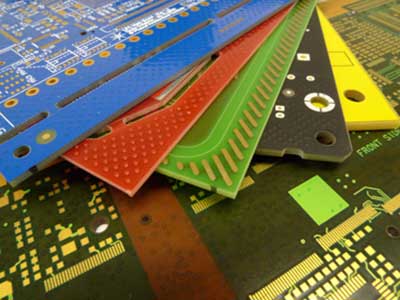
RoHS (Restriction of Hazardous Substances) compliance is a critical requirement for wire harnesses, cable assemblies, PCBs, and finished electronic products entering regulated markets. For OEMs, electronics brands, engineers, and procurement teams, RoHS isn't just a legal checkbox; it affects supplier selection, material sourcing, product approvals, export access, customer documentation, and long-term reliability.
This guide walks through what RoHS means for harness builds, where compliance risks appear in real assemblies, what documents prove compliance, and how testing fits in.
Contents
- Key Takeaways
- What does RoHS Mean?
- Does RoHS Apply to Wire Harnesses and Cable Assemblies?
- What’s the Difference Between RoHS 1, RoHS 2, and RoHS 3?
- The 10 Restricted RoHS Substances
- Where RoHS Risks Appear in Wire Harnesses
- 1. Soldered connections
- 2. Terminals and contacts
- 3. Connector housings
- 4. Cable insulation and jackets
- 5. Heat-shrink tubing and sleeving
- 6. Labels, tapes, and adhesives
- 7. Overmolded cable assemblies
- 8. Metal coatings and surface treatments
- RoHS-Compliant vs RoHS-Compliant With Exemption
- Why exemptions need careful review
- RoHS vs REACH: What is the Difference?
- What about RoHS vs China RoHS?
- What Documents Prove RoHS Compliance?
- Common RoHS documents for wire harnesses
- RoHS Testing for Cable Assemblies
- Choose OurPCB for RoHS-Compliant Wire Harness and Cable Assembly Support
- FAQs About RoHS Compliance for Wire Harnesses and Cable Assemblies
- Is RoHS only about lead?
- Why are phthalates important for cable assemblies?
- Does a RoHS certificate guarantee compliance?
- Can a cable assembly be RoHS-compliant with an exemption?
- What materials should be checked in a RoHS cable assembly?
Key Takeaways
- RoHS compliance limits hazardous substances in electrical and electronic equipment, including many wire harnesses and cable assemblies.
- RoHS limits apply to each homogeneous material, not the total weight of the finished assembly.
- The current RoHS substance list includes lead, mercury, cadmium, hexavalent chromium, PBB, PBDE, DEHP, BBP, DBP, and DIBP.
- Cable assemblies can contain RoHS-sensitive materials in solder, plating, PVC insulation, jackets, terminals, contacts, connector housings, sleeving, labels, and overmold compounds.
- A RoHS-compliant cable assembly should be supported by controlled materials, supplier declarations, test reports when needed, traceability records, and proper change control.
- Working with a manufacturer that understands both PCB assembly and wire harness manufacturing can reduce compliance gaps between boards, connectors, harnesses, and final products.
What does RoHS Mean?
RoHS stands for Restriction of Hazardous Substances. It’s a regulatory framework that limits certain hazardous substances in electrical and electronic equipment.
The original RoHS rules focused on six restricted substances. Later updates expanded the list to ten by adding four phthalates that are especially relevant to flexible plastics, cable jackets, insulation, and molded components.
In simple terms, a RoHS-compliant product must not contain restricted substances above the allowed concentration limits unless a valid exemption applies.
Does RoHS Apply to Wire Harnesses and Cable Assemblies?
Yes, RoHS can apply to wire harnesses and cable assemblies, especially when they are used in electrical and electronic equipment sold into regulated markets.
A cable assembly may be directly in scope if it’s sold as a finished cable product. A wire harness may also matter indirectly if it’s built into a finished electronic product. Even when a harness is not sold as a standalone consumer product, the OEM still needs compliant materials to support the final product’s RoHS declaration.
This is why many OEMs require RoHS declarations from cable assembly suppliers, connector suppliers, wire suppliers, terminal suppliers, and PCB assembly partners.
What’s the Difference Between RoHS 1, RoHS 2, and RoHS 3?
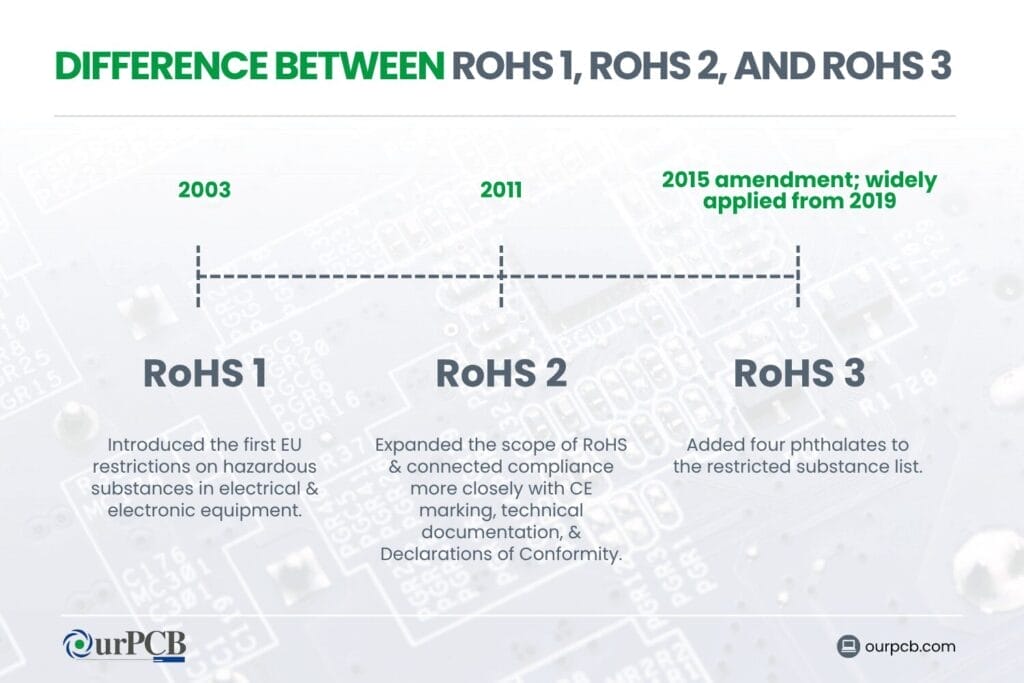
RoHS has changed over time as electronics regulations expanded to cover more product categories, stronger documentation requirements, and additional restricted substances.
| RoHS Stage | Key Date | Main Change | Restricted Substances |
|---|---|---|---|
| RoHS 1 | 2003 | Introduced the first EU restrictions on hazardous substances in electrical & electronic equipment. | 6 |
| RoHS 2 | 2011 | Expanded the scope of RoHS & connected compliance more closely with CE marking, technical documentation, & Declarations of Conformity. | 6 |
| RoHS 3 | 2015 amendment; widely applied from 2019 | Added four phthalates to the restricted substance list. | 10 |
Although “RoHS 3” is a common industry term, it’s technically an amendment to RoHS 2 rather than a completely separate directive. Many buyers use “RoHS 3” or “RoHS 10/10” to mean that a product meets limits for all ten restricted substances.
For cable assemblies, this matters because older RoHS declarations may only cover the original six substances. If your product incorporates flexible PVC, molded connectors, heat-shrink tubing, or adhesives, confirm the declaration explicitly covers the four phthalates added in later updates.
The 10 Restricted RoHS Substances
RoHS currently restricts ten substances in electrical and electronic equipment.
| Restricted Substance | Common Use in Electronics | Standard Limit |
|---|---|---|
| Lead | Solder, alloys, terminals, plating | 0.1% |
| Mercury | Switches, lamps, legacy components | 0.1% |
| Cadmium | Contacts, coatings, pigments | 0.01% |
| Hexavalent chromium | Metal coatings, anti-corrosion finishes | 0.1% |
| PBB | Flame-retardant plastics | 0.1% |
| PBDE | Flame-retardant plastics | 0.1% |
| DEHP | Plasticizer in flexible plastics & PVC | 0.1% |
| BBP | Plasticizer in plastics & adhesives | 0.1% |
| DBP | Plasticizer in flexible plastics | 0.1% |
| DIBP | Plasticizer in plastics & cable materials | 0.1% |
Cadmium has a stricter limit than the other restricted substances. Most RoHS substances are limited to 0.1% by weight in homogeneous material, while cadmium is limited to 0.01%.
Special Offer: Get $100 off your order!
Email [email protected] to get started!
Where RoHS Risks Appear in Wire Harnesses
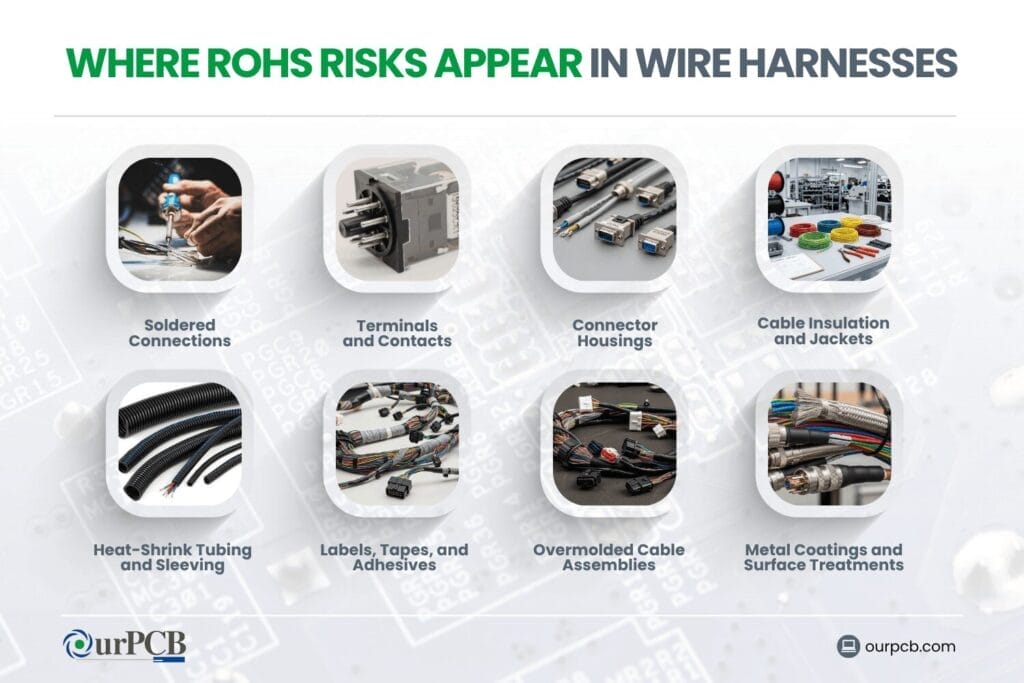
Wire harnesses and cable assemblies integrate numerous parts, materials, and manufacturing processes, making RoHS compliance more complex than it might seem. Key areas where restricted substances can appear include:
1. Soldered connections
Lead in solder is one of the best-known RoHS concerns. Many modern cable assemblies use lead-free solder, but legacy designs, repair work, military applications, or high-temperature solder requirements may still involve lead-containing materials.
If your assembly uses soldering, review and document the solder alloy.
2. Terminals and contacts
Terminals, contacts, and connector pins can include restricted substances in their base metal, plating, or surface finish.
Common review points include:
- Lead in copper alloys
- Cadmium in certain contacts
- Hexavalent chromium in coatings
- Lead in terminal plating
- Restricted substances in specialty finishes
For high-reliability applications, some restricted substances may appear under specific exemptions. However, the exemption must be identified and valid for the application.
3. Connector housings
Connector housings are often made from engineered plastics. These plastics may include flame retardants, colorants, stabilizers, or other additives.
The RoHS review should consider whether the housing contains restricted brominated flame retardants such as PBB or PBDE.
4. Cable insulation and jackets
Cable insulation and jackets are major RoHS review areas, especially when flexible PVC is used.
The four phthalates added under the RoHS update are commonly associated with flexible plastic materials. Because cable jackets need flexibility, durability, and processability, the material formulation must be checked carefully.
The best material depends on the electrical, mechanical, temperature, flexibility, chemical resistance, and compliance requirements of the project.
5. Heat-shrink tubing and sleeving
Heat-shrink tubing, braided sleeving, protective conduit, and insulation sleeves are sometimes overlooked during compliance review.
However, these materials can contain plasticizers, flame retardants, pigments, or additives that need RoHS verification.
6. Labels, tapes, and adhesives
Labels, tapes, adhesive wraps, and identification markers may seem minor, but they are still part of the assembly.
If they are included in the finished product, their material compliance should be documented.
7. Overmolded cable assemblies
Overmolded cable assemblies require special attention because the overmold compound becomes part of the finished product.
The overmold material should be checked for restricted substances, and lock the approved compound into the BOM so no one changes it without review.
8. Metal coatings and surface treatments
Hexavalent chromium can appear in some anti-corrosion coatings and metal surface treatments. This is especially important for industrial, outdoor, marine, automotive, agricultural, and harsh-environment harnesses.
When corrosion resistance is required, select the finish carefully to meet both performance and compliance needs.
RoHS-Compliant vs RoHS-Compliant With Exemption
Not every RoHS-related product falls into a simple “compliant” or “non-compliant” category.
| RoHS Status | What It Means |
|---|---|
| RoHS-Compliant | The product’s restricted substances are below the allowed limits in each homogeneous material. |
| RoHS-Compliant With Exemption | The product may contain a restricted substance above the normal limit, but the use is allowed under a valid RoHS exemption. |
| Not RoHS-Compliant | The product contains a restricted substance above the allowed limit, & no valid exemption applies. |
Why exemptions need careful review
Exemptions are not a shortcut. They must match the material, product use, and regulatory conditions. They may also change over time.
If your product depends on an exemption, your supplier should identify it clearly in the documentation. A vague statement such as “RoHS compliant with exemption” is not enough for many OEM quality teams.
RoHS vs REACH: What is the Difference?
RoHS focuses on restricting specific hazardous substances in electrical and electronic equipment. Registration, Evaluation, Authorization, and Restriction of Chemicals (REACH) is a broader chemical regulation that applies to chemicals, substances, mixtures, and articles across many industries. It includes requirements related to Substances of Very High Concern, commonly called SVHCs.
From a sourcing perspective, it’s smart to request RoHS and REACH information at the same time. This reduces back-and-forth during customer approvals and helps prevent late-stage documentation delays.
What about RoHS vs China RoHS?
EU RoHS and China RoHS are separate regulations with different marking and disclosure requirements. If your product ships globally, your compliance package may also need China RoHS information, REACH declarations, SCIP data, or customer-specific restricted substance declarations, which is why compliance should come up at the RFQ stage, not after production.
What Documents Prove RoHS Compliance?
RoHS compliance usually depends on a documentation package, not one file.
The exact documents depend on the product type, market, customer requirements, and supplier role.
Common RoHS documents for wire harnesses
| Document | Purpose |
|---|---|
| RoHS Declaration | States that the product or material meets RoHS requirements |
| Certificate of Compliance | Confirms compliance for a part, shipment, or assembly |
| Material Declaration | Provides more detail on material composition or restricted substances |
| IPC-1752A Declaration | Standardized electronics industry material declaration format |
| Test Report | Shows analytical testing results for restricted substances |
| BOM Compliance Review | Links compliance records to the approved bill of materials |
| Supplier Declarations | Confirms RoHS status from wire, connector, terminal, & material suppliers |
| Technical File Support | Organizes evidence for product-level compliance |
| Change Control Records | Shows that substitutions & revisions were reviewed for compliance |
For a custom cable assembly, the most useful documentation is tied to the exact part number, drawing revision, BOM revision, material list, and supplier lot.
RoHS Testing for Cable Assemblies
Testing supports RoHS compliance when material risk is high or supplier documentation is incomplete.
XRF screening is the most common method: quick and useful for incoming material inspection, supplier verification, plating checks, and plastic screening. It detects lead, cadmium, mercury, chromium, and bromine, but has limitations: it cannot confirm hexavalent chromium, identify specific flame retardants, or fully cover phthalates.
Laboratory chemical testing is needed for higher-risk materials and covers heavy metal analysis, phthalate testing, hexavalent chromium confirmation, and brominated flame retardant testing.
Testing is most useful when supplier declarations are missing or outdated, when a new material is introduced, when the cable compound or connector plating changes, when the assembly uses flexible PVC, or when the customer requires third-party reports.
Choose OurPCB for RoHS-Compliant Wire Harness and Cable Assembly Support
At OurPCB, we support customers with PCB manufacturing, PCB assembly, wire harness manufacturing, custom cable assemblies, component sourcing, prototyping, production, and testing. This mitigates the risk of compliance mismatches between your PCB, harness, connectors, and final product.
Whether you need a prototype cable assembly, production wire harness, overmolded cable, ribbon cable, industrial cable assembly, or PCB-to-harness solution, our team can help. We'll review your drawings and build a compliant manufacturing plan
Send your BOM, drawing, sample photos, connector requirements, and target compliance needs to OurPCB today. We can help you build RoHS-compliant cable assemblies that are ready for real-world production.
FAQs About RoHS Compliance for Wire Harnesses and Cable Assemblies
Is RoHS only about lead?
No, lead is one of the most recognized restricted substances, but RoHS covers ten substances. These include lead, mercury, cadmium, hexavalent chromium, PBB, PBDE, DEHP, BBP, DBP, and DIBP.
Why are phthalates important for cable assemblies?
Phthalates can be used as plasticizers in flexible plastics, including some PVC cable insulation, jackets, adhesives, and molded materials. Since cable assemblies often require flexibility, phthalate compliance is an important part of RoHS review.
Does a RoHS certificate guarantee compliance?
A RoHS certificate is helpful, but it should match the exact part number, revision, BOM, and material configuration. For higher-risk products, customers may also request supplier declarations, material declarations, test reports, and traceability records.
Can a cable assembly be RoHS-compliant with an exemption?
Yes. Some materials may contain restricted substances above the standard limit but still be allowed under a valid RoHS exemption. However, the exemption must be clearly identified and suitable for the product’s application.
What materials should be checked in a RoHS cable assembly?
You should check every material in the assembly, including conductors and plating, insulation and jackets, solder, terminals and contacts, connector housings, heat-shrink and sleeving, plus labels, tapes, adhesives, and overmolds.
Back to Top: RoHS Compliance for Wire Harnesses and Cable Assemblies
Special Offer: Get $100 off your order!
Email [email protected] to get started!